Sea School is a United States Coast Guard approved maritime training provider. It teaches captains licences, STCW and safety certifications across seven physical schools and online, and its catalogue is never still: class dates open and close every week, instructors change, and every course has to show the right sessions to the right students.
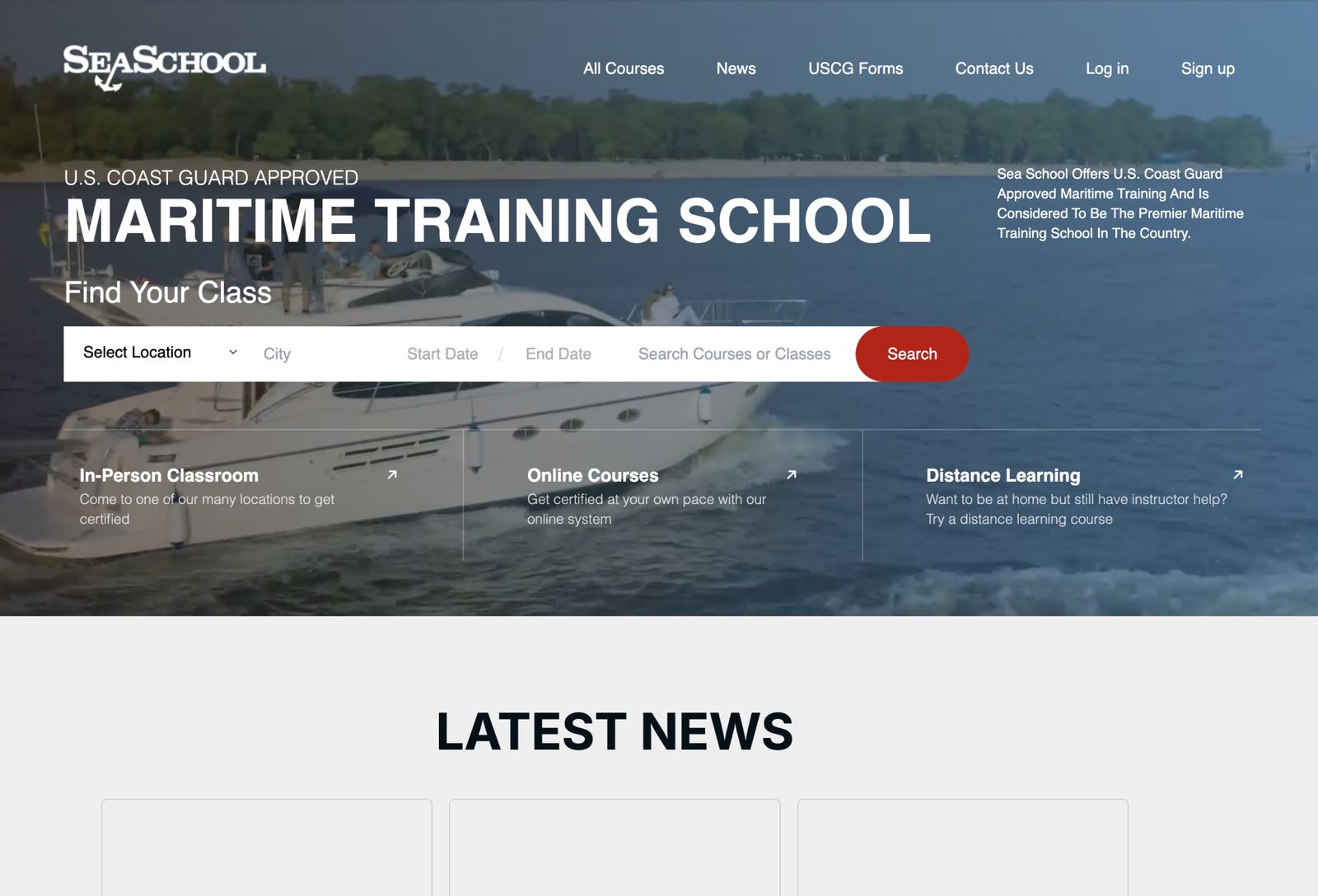
The old website could not keep up with that. It looked dated next to what maritime students expect, and every schedule change was manual work. The brief was unusually specific and unusually disciplined: refresh the design and move to Webflow, but do not tear up the structure. Students and returning captains already knew how to find things, and that familiarity was worth protecting.
So the job was to modernise the surface and industrialise what sits underneath, without moving the furniture.
Strategy
We started from the client's own constraint and treated the existing information architecture as fixed. What changed was the depth behind it. Courses, class sessions, instructors, locations and Coast Guard forms each became their own content type, so the catalogue could grow without anyone building a page by hand.
That decision is what makes the site work today. A course page is a template. A class date is a CMS entry. Adding a new session in Tampa for next spring is data entry, not a development ticket, which keeps time to market for a new class in the hands of the people who schedule it.
Design
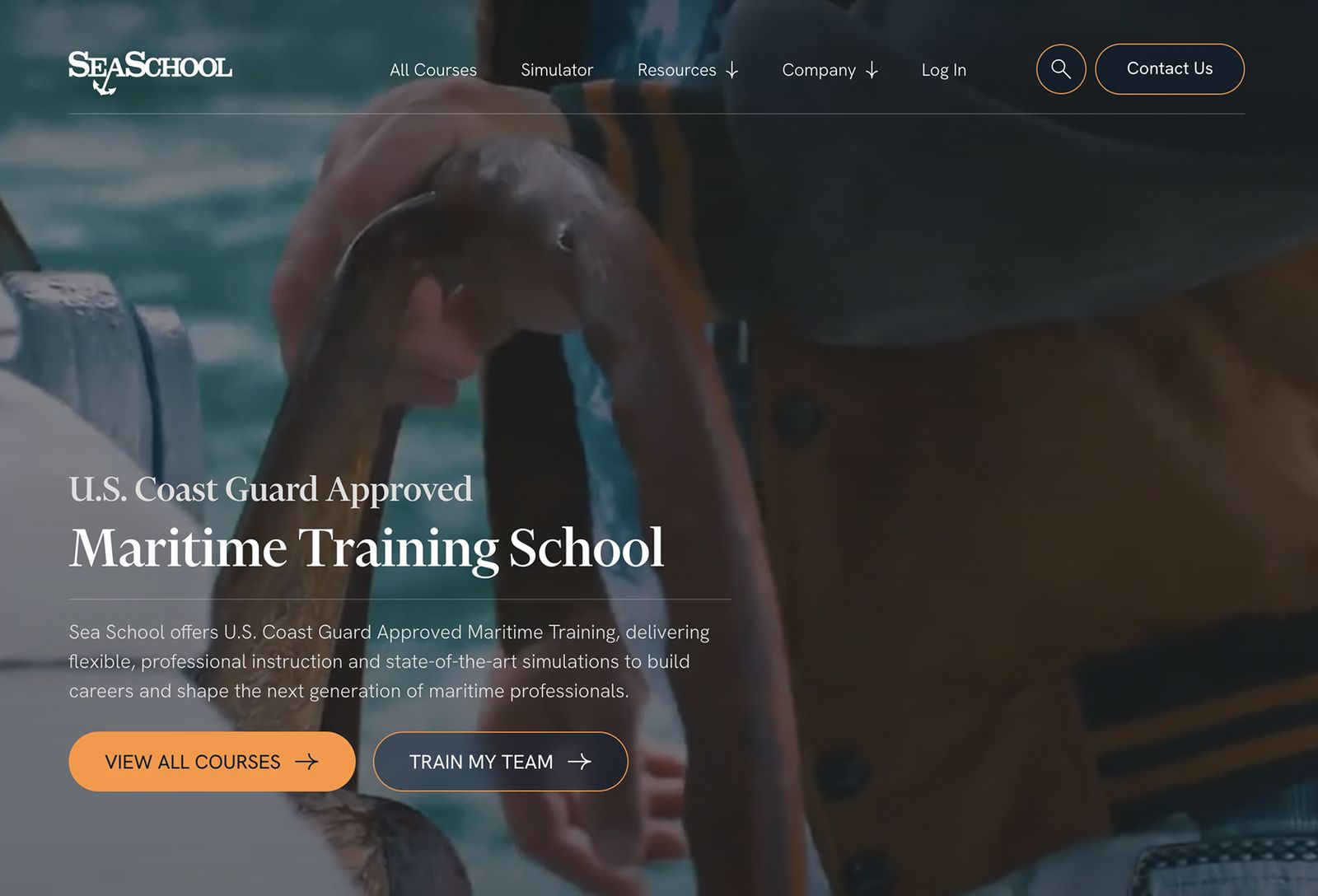
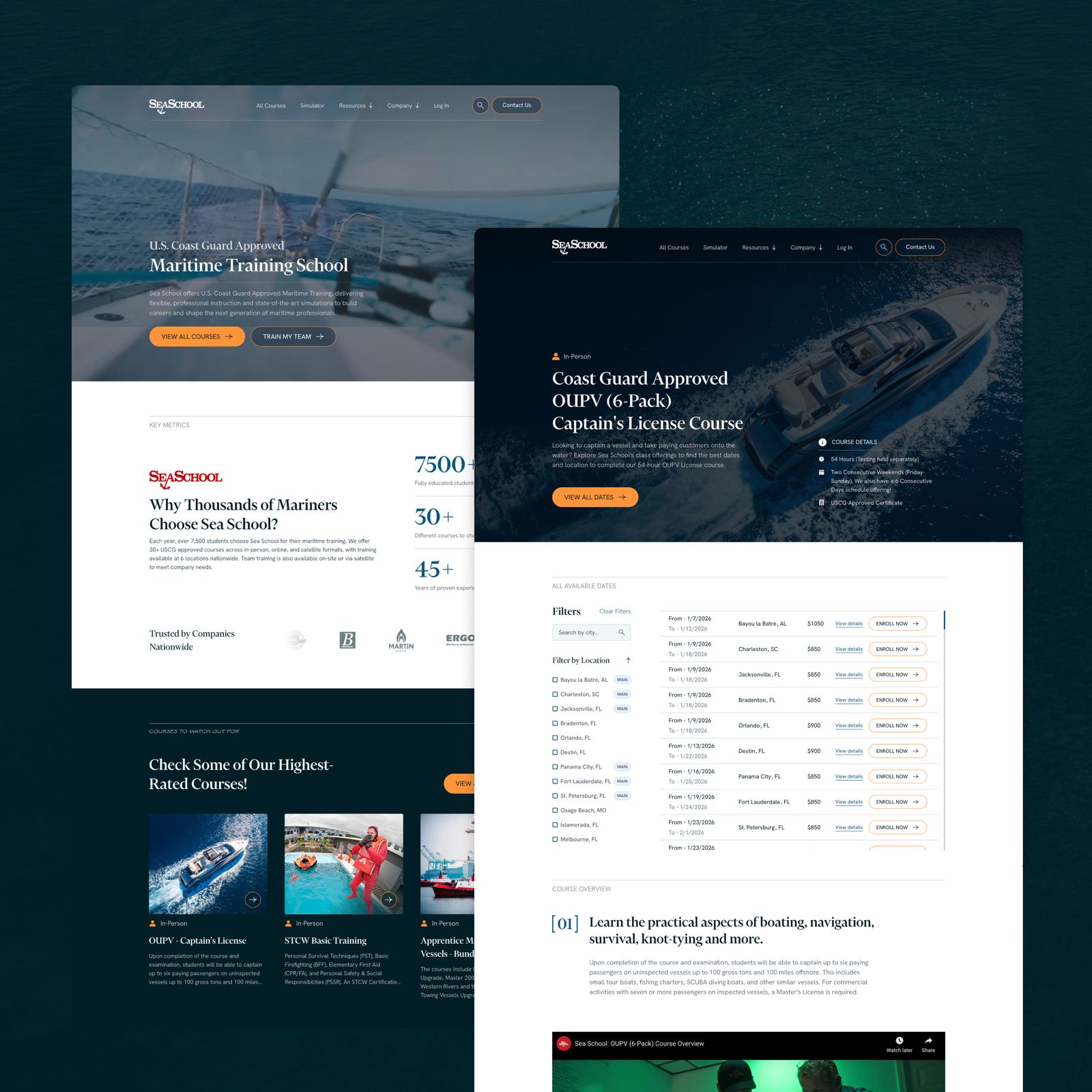
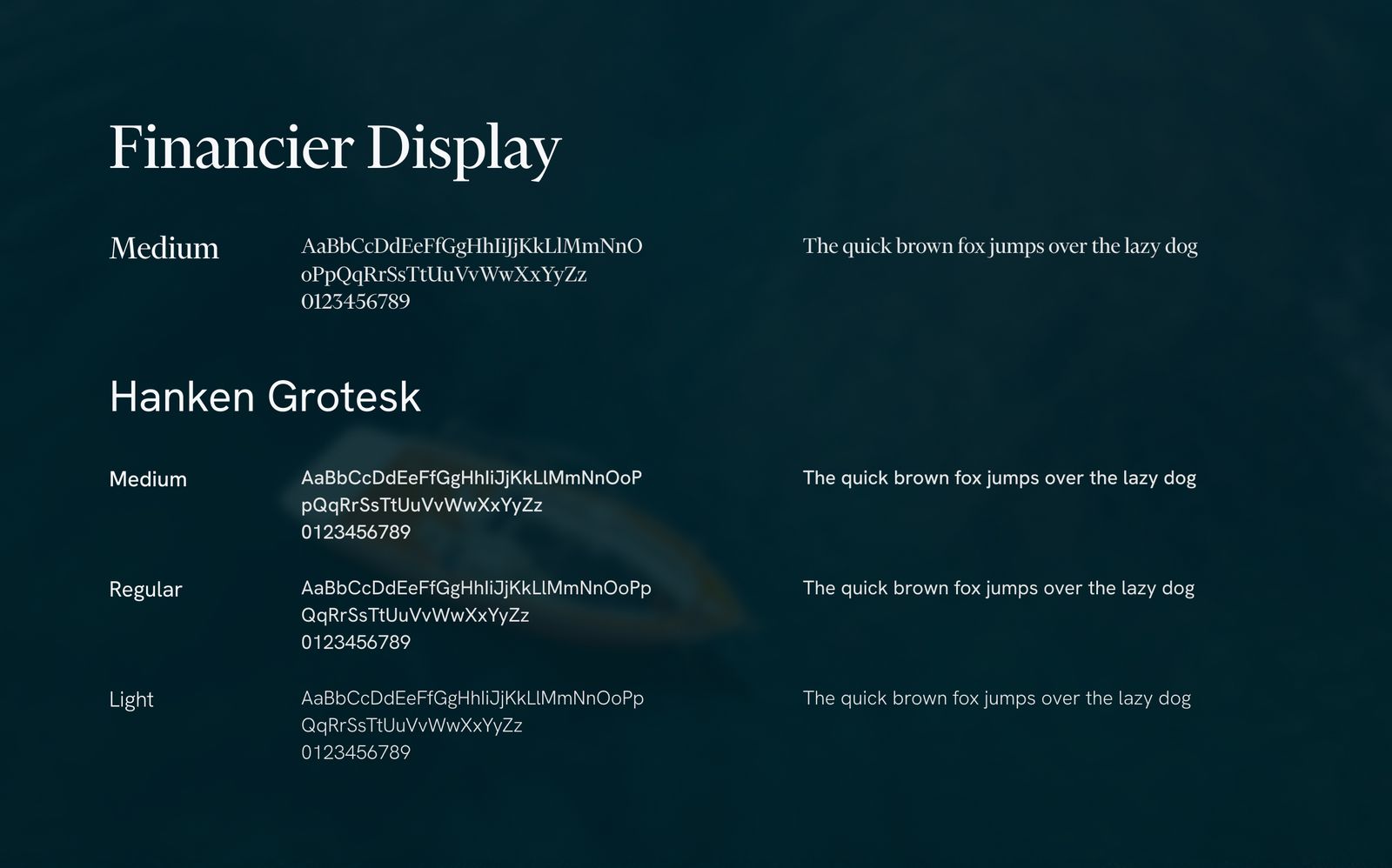
The brand refresh kept Sea School's signature red as an accent rather than a wash, supported by orange and turquoise. The result reads as a professional training institution rather than a brochure, and it keeps the human, plain-spoken tone the school is known for. Course pages were designed around the question students actually arrive with, which is whether a given licence is the one they need and when they can sit it.
Development
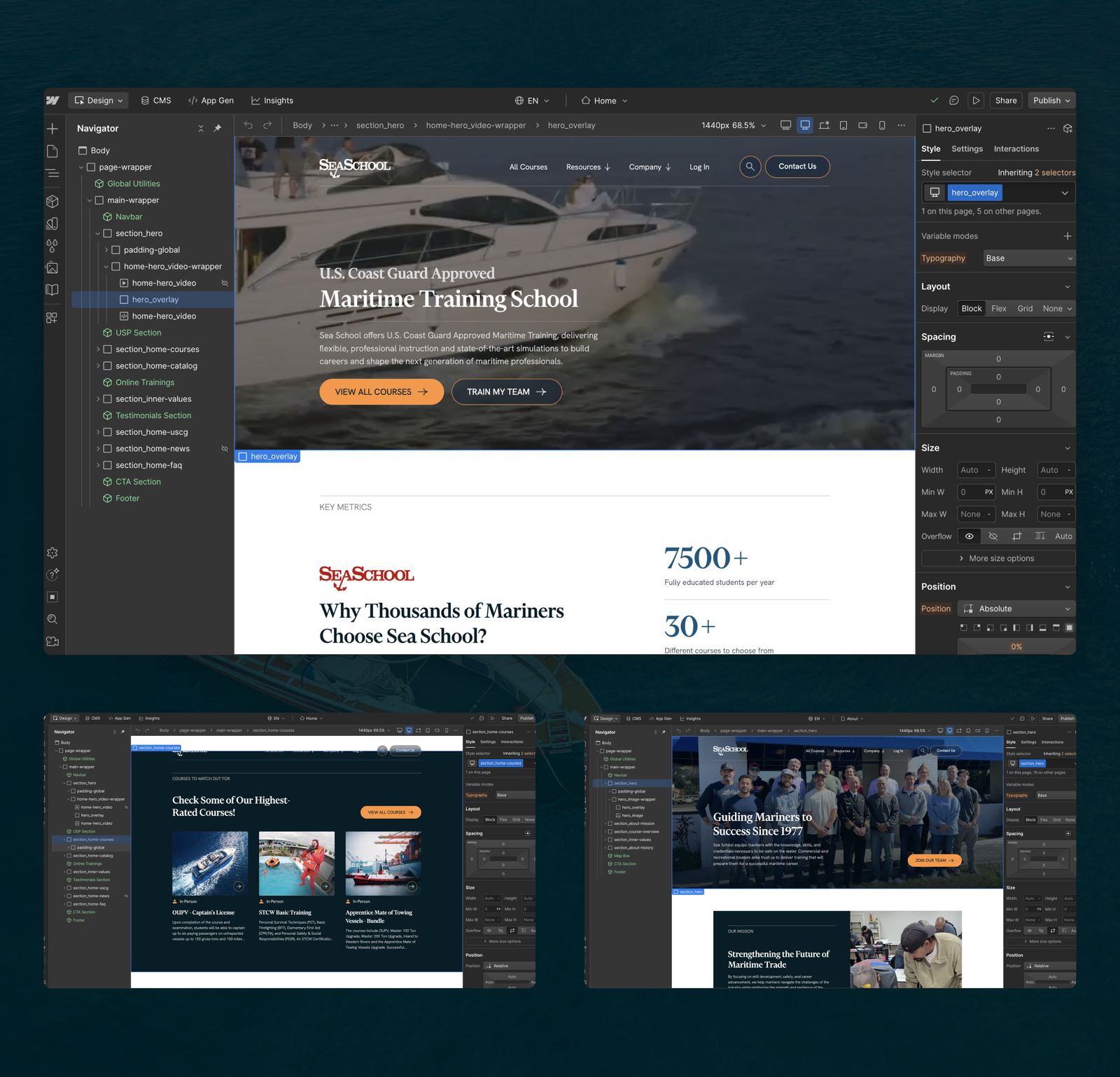
The build is CMS-first. Every repeating page type runs from a collection, which is why the live site now carries far more pages than a hand-built site of this kind normally would:
- 506 individual class session pages, each tied to a course and a location
- 59 course pages covering licences, STCW and specialist training
- 28 instructor profiles
- 18 United States Coast Guard form pages, plus the forms index
- 7 location pages for the physical schools, with a Mapbox map
School and ContactPoint structured data ship on the site so search engines read Sea School as an educational institution rather than a generic business. After launch we moved the Mapbox integration onto the client's own account so the map bills to them and stays under their control.
Launch and after
The site went live in August 2025. Work continued into 2026 on the course templates, and the client's marketing team now runs the platform day to day, publishing a monthly newsletter and seasonal promotions off the back of it.
The Results
| Metric | Result | Context |
|---|---|---|
| 650 pages | Live on Webflow | Verified from the sitemap on 13 September 2026 |
| 506 class sessions | Publishing from the CMS, not hand built | Each one tied to a course and one of the seven schools |
| 59 courses, 28 instructors | Running on templates | The catalogue grows without developer involvement |
| 7 locations | One platform, with a Mapbox map | Map later transferred to the client's own account so they own the billing |
| Structured data as a School | School and ContactPoint JSON-LD live | Search engines read Sea School as an educational institution |
| Structure preserved | The client's existing architecture kept intact | An explicit requirement: modernise the experience without making returning students relearn the site |
Services we delivered
- Brand refresh: a restrained use of Sea School's signature red, supported by orange and turquoise, applied across the site
- Web Design: UX and UI for course, class, instructor and location templates, designed around what a student needs to decide
- Webflow Development: CMS-first build with collections for courses, class sessions, instructors, locations, Coast Guard forms and the blog
- Migration: move to Webflow with the existing site structure deliberately preserved
- Integrations: Mapbox locations map, later handed over to the client's own Mapbox account
- Ongoing support: course template work and platform support continuing into 2026