




SEO site structure

SEO site structure for B2B websites, built for Google and AI search

Site structure is how your pages are grouped, linked and addressed: the sitemap, URLs, navigation, internal links and redirects. Creative Corner Studio plans it from real search data, so every page on your B2B website answers one search and its follow-up questions. Google and AI assistants can tell what each page is for, and the right buyers find their page and get in touch.

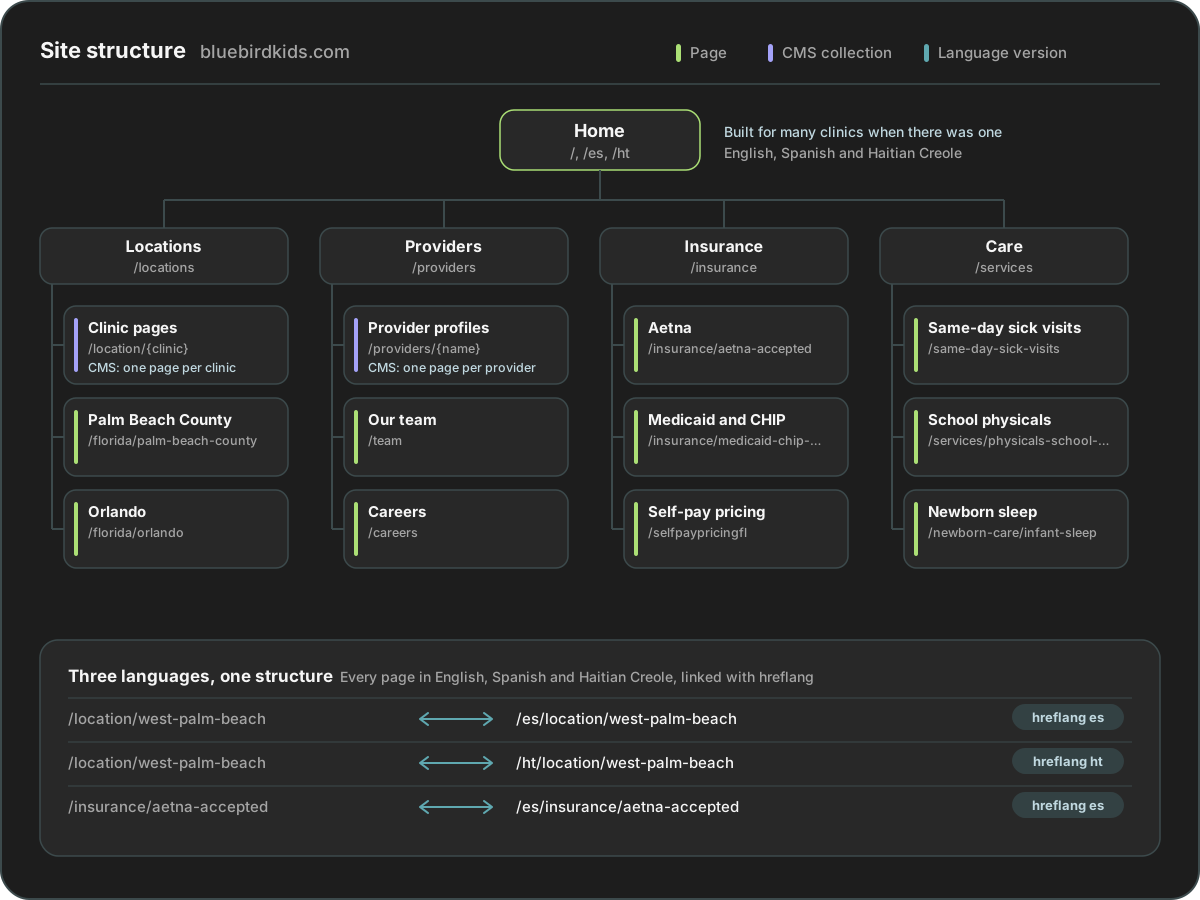
The site structure of bluebirdkids.com: Home, then Locations, Providers, Insurance and Care, each page with its URL, CMS collections for clinic pages and provider profiles, and every page in English, Spanish and Haitian Creole, linked with hreflang
Who it’s for

Is your site structure ready for AI search?

AI search doesn’t need a special structure, just a clear one: Google’s own guidance says the usual SEO basics apply. If any of these four sound familiar, yours isn’t there yet.

Competing pages

Two pages chase the same search, and neither ranks

A service page, a blog post and an old landing page all aim at one search, so Google and AI assistants have to guess which one answers it. A page map gives each search one page and folds the rest into it.

Navigation

Your menu mirrors your org chart

Buyers look for a problem, a service or an industry, not your departments. Meanwhile important pages sit three menus deep, or nothing links to them at all.

Redesign or migration

You’re redesigning, or your last redesign cost you traffic

A sitemap is cheapest to change before design starts, and redirects before launch. Planned first, the move keeps the pages that already rank. Already launched? We find what the move broke and plan the fix.

More sites, markets or languages

You’re merging sites or adding markets

A second domain, a new region or another language changes the whole tree. Energo-Pro’s three websites became one bilingual platform of 3,002 URLs.

Probably not for you if your site has a handful of pages and one audience (our sitemap examples may be all you need), or you only need your XML sitemap or robots.txt fixed, which is technical SEO. Not sure? Send us your URL and we’ll tell you what we’d change first.

One page, one search

How we map a site: six recent structure plans

When a buyer asks ChatGPT or Google’s AI Mode a question, the AI runs related searches in the background (query fan-out). So every page targets one main search and answers its follow-up questions on the same page. A question gets its own page only when it’s a different search with a different reader. These rows come from recent plans, with the clients’ names left out.

Manufacturing software, US/bom-software
Main search
bom software
Follow-up searches and questions on the page
  • What does BOM software cost?
  • How long does an ERP integration take?
  • Which ERPs and CAD systems does it support?
  • Cloud or on-premises?
Decision
New hub page. The homepage targeted a phrase with about 10 searches a month; this one has 720 and low competition, and it gives the 30+ ERP integration pages a hub above them.
Industrial cleaning robots, Denmark/storage-tank-cleaning
Main search
industrial tank cleaning
Follow-up searches and questions on the page
  • tank cleaning robot
  • automatic tank cleaning machine
  • tank cleaning equipment
Decision
One page per buyer group (tank owners, hull work, engineering buyers), not one per product. Hull fouling got a guide instead, because that reader is still researching.
Geotechnical engineering, US East Coast/locations/[city]
Main search
geotechnical engineer in [city]
Follow-up searches and questions on the page
  • Which services do you offer here?
  • Which projects have you done nearby?
Decision
A CMS template for each city they serve, linked to its services and nearby projects, so a new region goes live without a developer. A 7-page site became a structure of 25+ pages.
Aircraft engine services, three countries/engines/[model]
Main search
[engine model] engine
Follow-up searches and questions on the page
  • What are the overhaul times?
  • Is this engine for sale or lease?
Decision
Three regional sites merged into one, with every engine model on a CMS page a non-technical editor can update. 184 old URLs redirect one to one, so regional rankings carry over.
Ophthalmology clinical research, US and Europe/monitoring
Main search
clinical trial monitoring services
Follow-up searches and questions on the page
  • glaucoma microshunt trial monitoring
  • dry eye device trial monitoring
  • ophthalmic medical device CRA
Decision
The niche’s own terms have no measurable search volume, so this page targets the one with real buyers: 70 searches a month, with clicks bid up to $30. The specialty phrasings go in the copy, where AI assistants can quote them.
Early-learning centers, four locations/programs/pre-k
Main search
pre-k STEM program [city]
Follow-up searches and questions on the page
  • Will my child be ready for kindergarten?
  • What do pre-k children do in the STEM lab?
Decision
One template for six age-based program pages. Curriculum, literacy and enrichment pages that competed with each other were merged into them, and 76 pages became 18.

From structure plans for six companies in 2026, most of them in niche markets: few people search, but the ones who do are buyers. Search volumes are US monthly searches from DataForSEO at the time of each plan.

AI search

Site structure for AI search: what matters and what you can skip

If you feel behind on AI search, start here: a lot of the advice is guesswork. Here’s what Google’s own guidance says, and what we do on every project.

Pages for AI questions

What works: One page per search, with its follow-up questions answered on that page

What you can skip
A separate page for every question an AI might ask. Google calls pages made mainly to sway AI answers scaled content abuse

AI text files

What works: Plain HTML that Google and AI crawlers can read, with nothing hidden behind scripts

What you can skip
An llms.txt file. Google says it will neither help nor harm your visibility in Search

Structured data

What works: Schema that matches what’s on the page: Organization, Service, BreadcrumbList, FAQPage

What you can skip
Special “AI schema”. Google says its AI features need no special markup

Page length

What works: Sections that each answer one question, because people skim

What you can skip
Chopping pages into tiny chunks for AI. Google says there’s no requirement to

Topic clusters and silos

What works: A hub page for each service or topic, linked to the pages in its cluster and back, plus links across to related services, industries and case studies

What you can skip
Strict silos that never link across sections. Link wherever it helps the reader

Page depth

What works: Key pages within two clicks of the homepage, reached from the menu, a hub or a breadcrumb

What you can skip
A completely flat site with every page hanging off the homepage. Hubs show which pages belong together

Sources: Google’s guide to optimizing for generative AI features in Search (updated July 10, 2026) and Google’s spam policies. The rest of AI search is on our AI search optimization page.

What you get with a site structure plan

Eight deliverables your designers, developers and writers can build from, each reviewed with your team before anything is designed. The same set works for a 20-page site and for an enterprise site in several markets.

URL audit

Every URL on your current site with its traffic, rankings, backlinks and AI mentions, marked keep, merge, rewrite or retire.

Keyword research

The searches your buyers make, and the follow-up questions AI assistants run behind each one, grouped by buyer and stage.

Page map

One main search per page, with its search volume, intent and cost per click, the questions the page answers, and the next step it leads to, from a guide to a service page to a call. No two pages chasing the same search.

Visual sitemap

The whole hierarchy in Figma: topic hubs and the pages in each cluster, service and industry pages, CMS collections and how they connect, signed off before design starts.

URL and navigation rules

Short, readable URL patterns, the main menu, the footer and breadcrumbs, built around how buyers look for what you sell, with key pages within two clicks of the homepage.

Internal linking plan

Which pages link to which: hubs down to their cluster pages and back, and across to related services and case studies, so no page is left without links and every link says where it goes.

CMS collection model

Collections, fields and templates for services, industries, case studies and posts, so new pages slot into the structure without a developer.

Redirect map

Every old URL mapped to its new page with a 301, without chains, and with titles, descriptions and schema carried across.

Case studies

Site structures we planned, and what came of them

Energo-Pro
Energo-Pro website
B2BEnergy

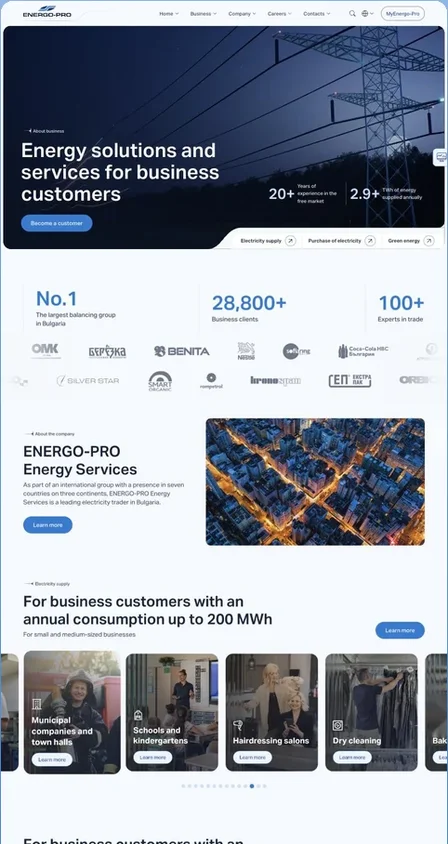
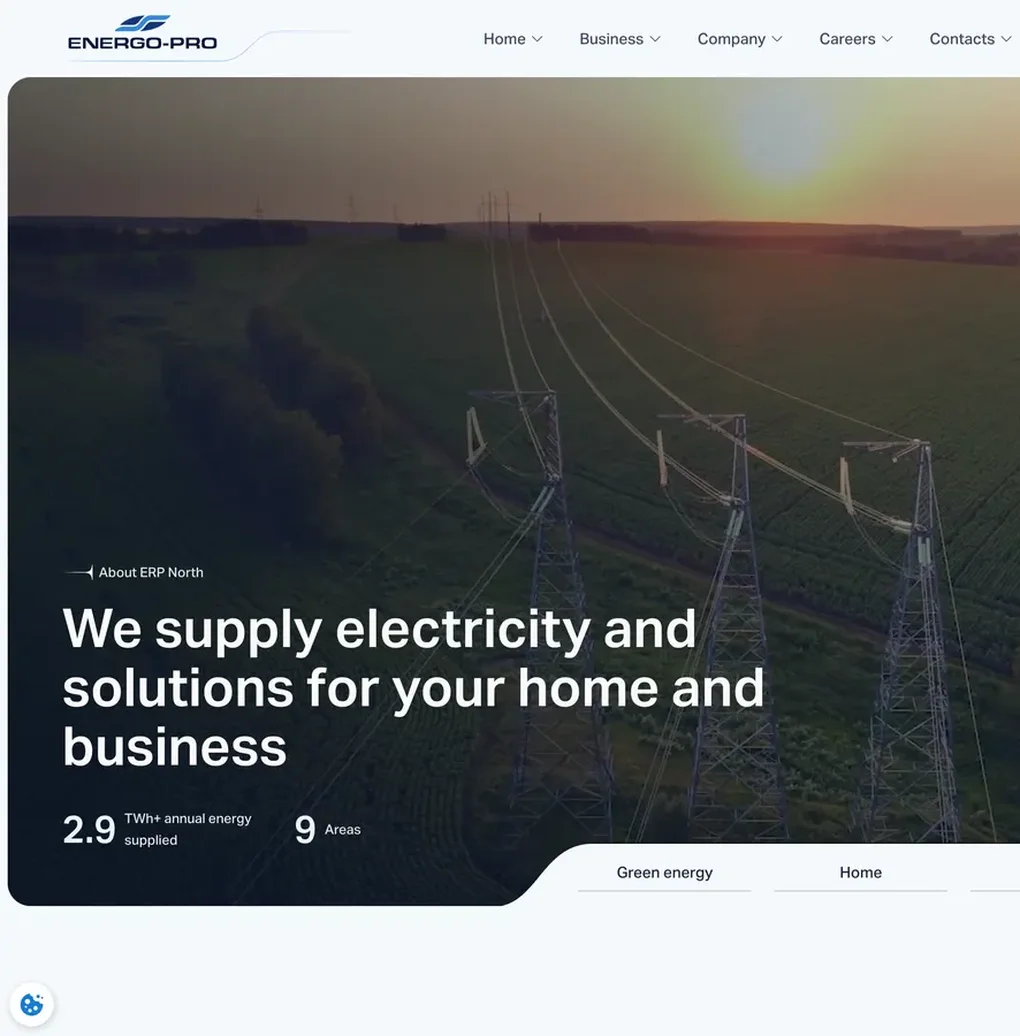
Energo-Pro ran three separate websites. After auditing all three sitemaps page by page, we recommended merging them into one, with a structure built around how customers actually use an energy provider. The bilingual site serves 3,002 URLs, and a full 301 redirect map covers both retired domains in both languages.

3 → 1

Websites Consolidated

3,002

URLs on One Platform

Read the Energo-Pro case study
Bluebird Kids Health
Bluebird Kids Health website
Healthcare

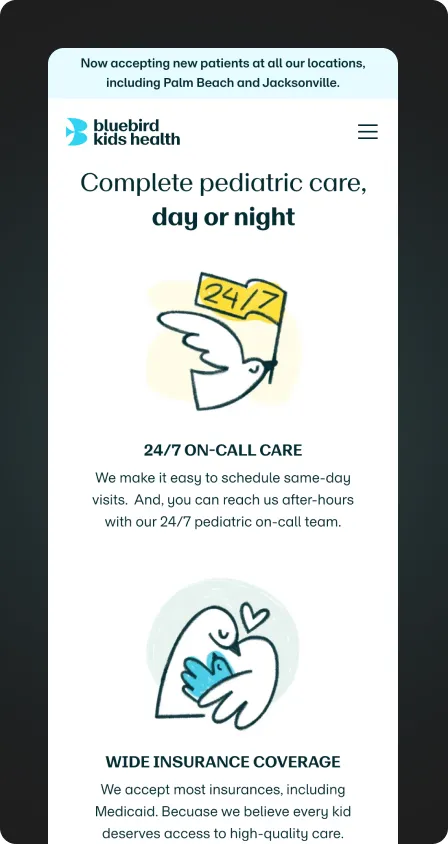
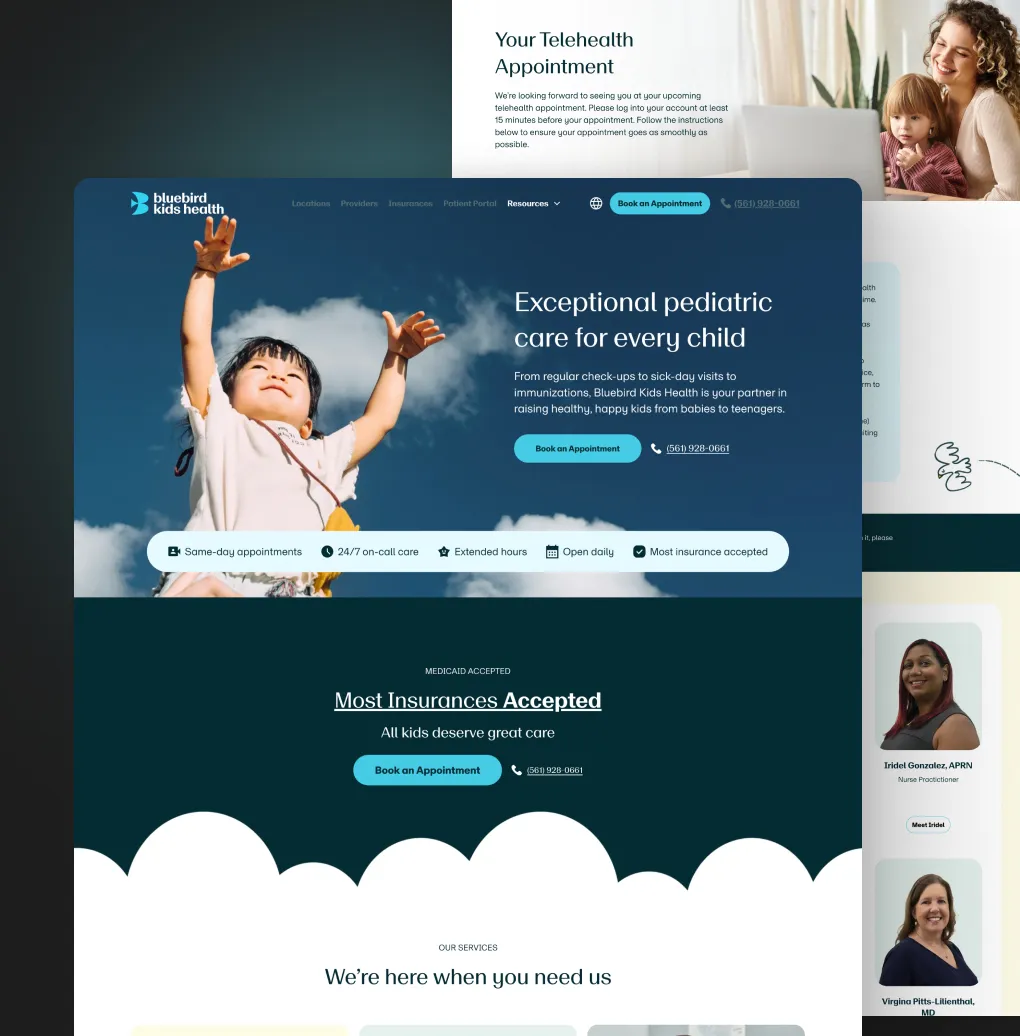
Bluebird Kids Health had no website when we started, so we structured the first one around the company it planned to become: a locations CMS built for many clinics when there was one, county pages, a provider directory and an insurance hub. The same structure now carries 11 clinics across four Florida metro areas and 796 URLs in English, Spanish and Haitian Creole, and new locations go live for opening day.

11

Clinic Locations on One Structure

796

URLs in 3 Languages

Read the Bluebird Kids Health case study
Fujipoly
Fujipoly website
ManufacturingTechnology

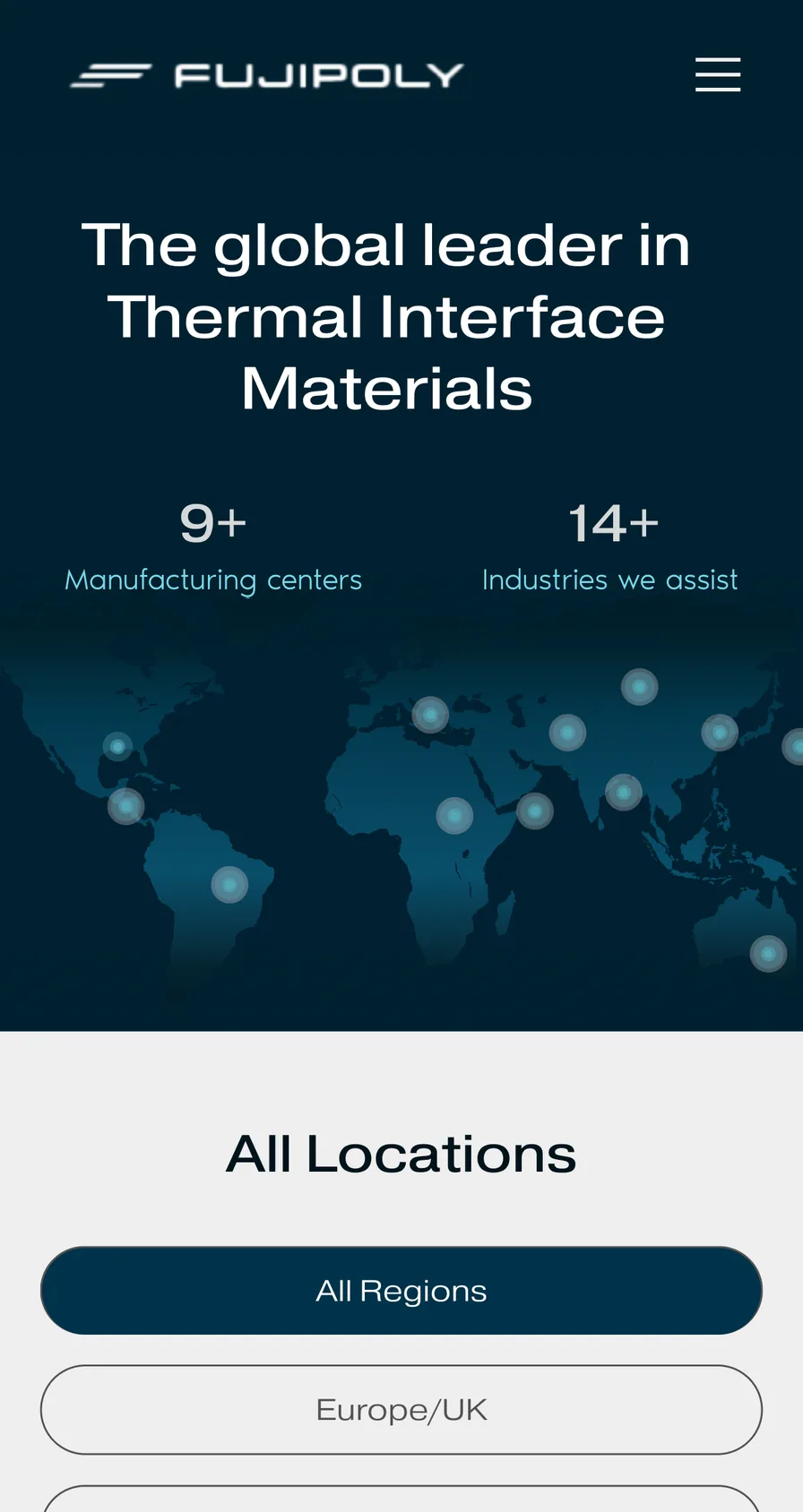
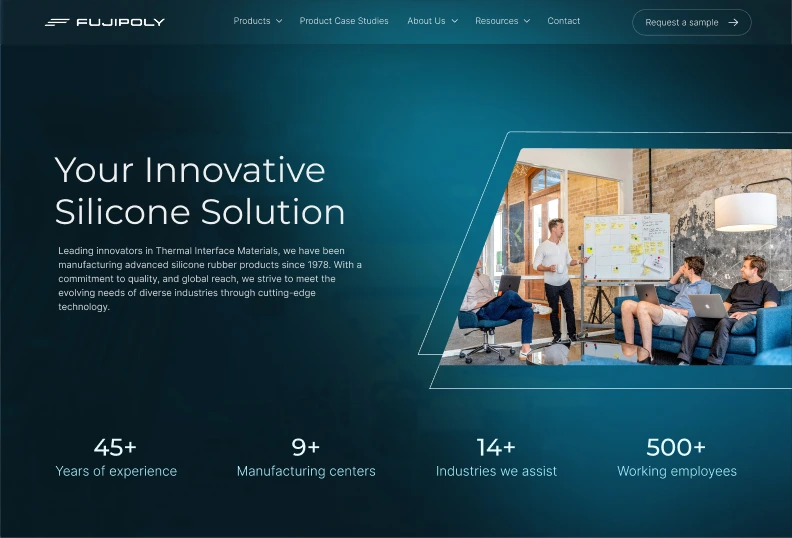
Fujipoly Europe’s catalog of thermal interface materials sat behind navigation that followed the internal product hierarchy. We restructured it around how engineers search, with a route in from each of more than 14 industries as well as by part, and product pages laid out the same way so comparing two materials doesn’t mean relearning the page.

64

Pages Live

14+

Industries as Routes into the Catalog

Read the Fujipoly case study

Will restructuring my site hurt our rankings?

It shouldn’t, if the move is planned around the pages that bring your traffic. No one can guarantee rankings. Here’s what we control.

Pages that rank, earn links or bring in leads keep their address wherever they can.

RAM Tracking’s 664 URLs went live on the new site with the URL structure preserved. A crawl of more than 700 pages five weeks after launch found zero internal 404s.

Fewer, stronger pages beat many thin ones.

TeamUp’s audit classified every URL, and pages with zero clicks were retired instead of migrated. Testlio’s hundreds of legacy pages were folded into a clean set of templates, and every page removed at launch got a redirect.

A redirect map is a forwarding address for every page. Skip it and Google keeps knocking on the old door.

Energo-Pro’s map covered both retired domains in both languages. Klipboard’s covered renamed legacy products and a full check for missing pages across the old and new structures.

We compare the new structure with the old one, in numbers.

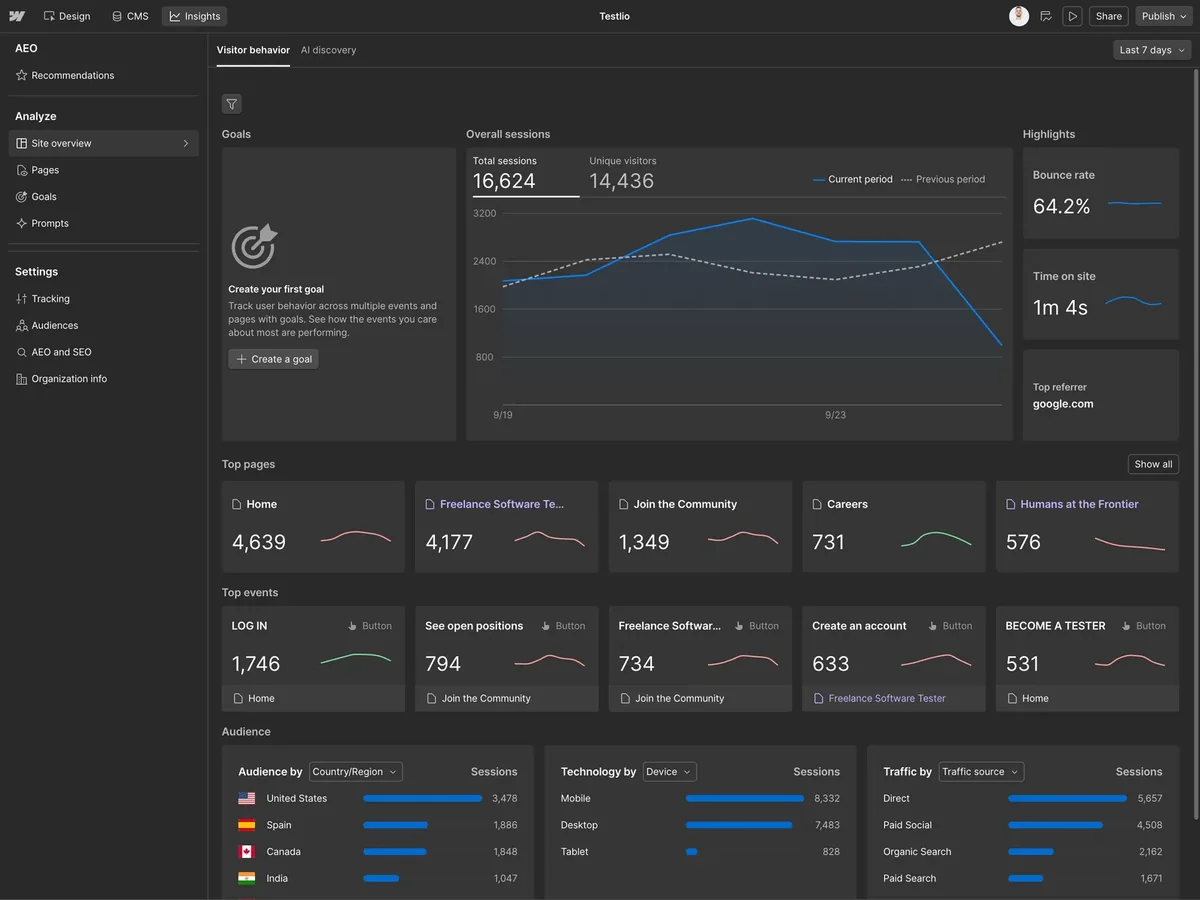
We watch Search Console for indexing and impressions, crawl the site for broken links and pages nothing links to, and track mentions in ChatGPT, Perplexity and Google AI Overviews. After Gymdesk’s launch, a redirect cleanup cleared 927 crawler-reported errors.

Webflow Insights for Testlio: sessions, top pages and top events on the live site
CMS structure

How should a CMS be structured?

Around how buyers look for what you sell. The collections you choose shape your URLs, your menu and your internal links: in Webflow, for example, each collection gets its own URL folder. We plan structures for any platform.

Collections follow the way you sell, not one flat folder.

Cloud Office sells in five page levels, so each level got its own collection: 18 in all, with URLs like /our-solutions/ instead of one flat folder.

Your team adds a page without asking a developer.

Customertimes runs 313 pages on more than 40 collections, so a new service, glossary term or open role arrives as content, not a build request.

A hub gives a group of pages one place to link from and one search to win.

The manufacturing software plan in the table above puts a /bom-software hub over its 30+ ERP integration pages, aimed at a search with 720 a month.

Each language or market gets its own URL folder, tagged with hreflang.

Search engines then show each buyer the version for their market. Energo-Pro’s bilingual site serves 3,002 URLs from one structure.

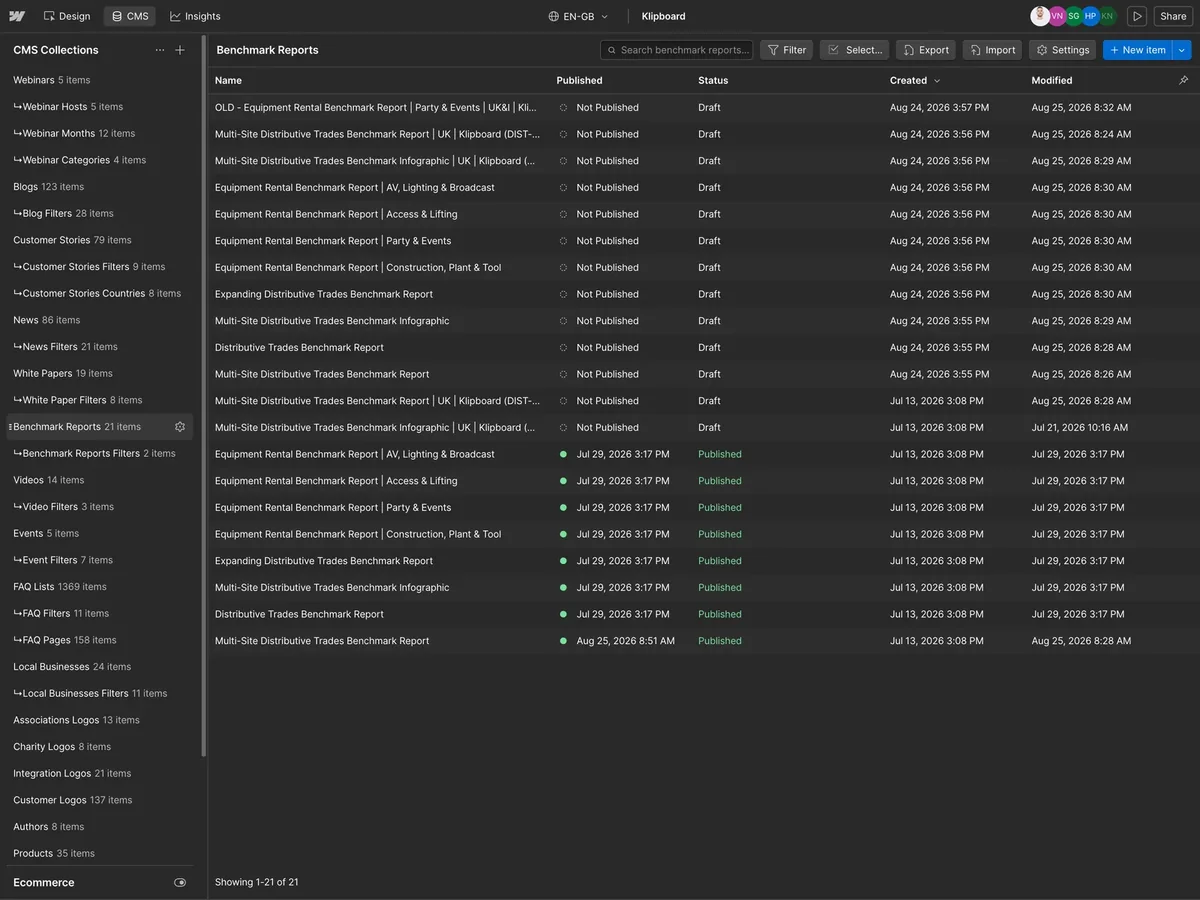
Klipboard's CMS in Webflow: webinars, blogs, customer stories, news and reports in one project

How long does site structure planning take?

2 to 3 weeks, in six steps. Before a single page is designed.

For a typical B2B site of 10 to 20 pages, the plan takes about 2 to 3 weeks and runs as the first phase of a website project. Merging several sites or adding markets takes longer.

  • 1Week 1

    Audit

    We crawl every URL and pull its traffic, rankings, backlinks and AI mentions, then mark each page keep, merge, rewrite or retire.

    What you get: the URL audit.

  • 2Weeks 1 to 2

    Research

    We research the searches your buyers make and the follow-up questions AI assistants run behind them, grouped by buyer role and stage.

    What you get: the keyword and fan-out research.

  • 3Week 2

    Page map

    Each page gets one main search and the questions it answers. Pages that would compete are merged before anyone builds them.

    What you get: the page map.

  • 4Weeks 2 to 3

    Structure

    We set the hierarchy, URL rules, navigation, internal links and CMS collections, and draw it all as a visual sitemap in Figma.

    What you get: the sitemap, URL rules, linking plan and CMS model.

  • 5Week 3

    Redirect map

    Every old URL gets its new address, with no redirect chains, so links and rankings have somewhere to go.

    What you get: the redirect map.

  • 6Week 3

    Sign-off and handover

    We walk your team through the plan, adjust it, and hand it to design, content and development. No one free to write the new pages? We interview your experts and draft them for you to finish. After launch, we check indexing, crawl errors and AI mentions.

    What you get: a signed-off plan your team can build from.

Who plans your structure

Planned by the people who design and build it

Miroslav founded Creative Corner Studio in 2019 and has led 350+ projects since. He plans every structure with Alexandra Alexandrova, our SEO & AEO Specialist, who runs the keyword and fan-out research, and Mihaela Nikolova, our Design & Development Team Lead, who makes sure the plan can be built as drawn. You get one point of contact from the first call to sign-off, working as an extension of your team.

Creative Corner team memberCreative Corner team memberCreative Corner team memberCreative Corner team memberCreative Corner team memberCreative Corner team memberCreative Corner team member

50+

In-house team members

Creative Corner team memberCreative Corner team memberCreative Corner team memberCreative Corner team memberCreative Corner team memberCreative Corner team memberCreative Corner team member

350+

Projects since 2019

Creative Corner team memberCreative Corner team memberCreative Corner team memberCreative Corner team memberCreative Corner team memberCreative Corner team memberCreative Corner team member

50+

In-house team members

Creative Corner team memberCreative Corner team memberCreative Corner team memberCreative Corner team memberCreative Corner team memberCreative Corner team memberCreative Corner team member

350+

Projects since 2019

Delivering speed & scale with proven track record

350+ Projects Delivered Since 2019

7+ years in the business, and most of our clients still come from referrals, which can mean only one thing - we're good. Many do more than one project with us, and some of the very first clients from 2019 are still with us today.

B2B expertise

One thing, done well

Most of our clients sell to other businesses: SaaS, healthcare, manufacturing, energy, and niche technical markets where everyone knows the players. Our process is built for how those buyers decide.

From Start to Launch

Full-service expertise

From design and development to SEO, CRO, and copywriting, we handle every step of your web design journey so you don't have to worry about a thing.

Onboarding in 3 days

Started in days, not months

Align, plan, and get moving fast. We onboard quickly so your project starts with clarity, not chaos. No more waiting a month to kick off your project.

Backed by Data

2026 in Numbers

  • 12,178 hours logged
  • 58 projects finished
  • 6 to 12 weeks for a 10 to 20 page site
  • 13 countries served
  • 3× awards won
100% in-house team

50+ in-house team members

A partner, not an agency queue. You get direct access to the designers and developers on your project, working in your tools as an extension of your team. No "I'll check with the team", no messages lost in translation.

"Thanks to Creative Corner's efforts, the website was delivered on time. The team provided a well-detailed document of the project. Overall, they were responsive and prompt."

Viliana Petrova

Marketing Manager, SEPA Cyber Technologies

"You have been with us from the very beginning of our journey at Bluebird Kids Health and we can't be more grateful for all that you have done for and with us along the way! Wow - from the very first mockups of our initial website to the robust, beautiful and effective site that this team has built since - its been quite the adventure."

Rachel Wilson

Co-founder, Bluebird Kids Health

"We're already generating leads from it, which is what a website is supposed to do. The Creative Corner team was fantastic on the project management side too, on top of everything, with excellent guidance on what we needed and why, plus great creative ideas. I'm very happy."

Nolan Cockburn

Founder, SmartrBID

"Just wanted to thank you for your support and great work with the dashboards today. The meeting went great and ***** really liked it. Now we just have to nail the rest of the data and which tools to use. But we know it will be great. 🙏👍"

Martin Chevalley

Chief Executive Officer – InnSpire

"This looks AWESOME!! And that's so cool you hooked it up to the job board's API Let me review with the team and get back to you! Thank you guys!!"

Brigid Hynes

Retention Manager, Trashie & For Days

"Migrating complex systems is always a high-stress project, but working with this team gave me a level of security I didn’t expect. I felt completely confident that our data was in safe hands, and their attention to detail ensured that everything was handled securely and professionally."

Brian Lastovich

VP of Marketing @ Gymdesk

"First of all, congratulations on this really beautiful new website! It is already very appealing."

Bernhard Schulz

Owner

"Creative Corner has delivered a thorough marketing strategy and detailed UX design, which the client could implement easily. The site is much more user-friendly, which has led to increased traffic and sales. They've been communicative, timely partners, maintaining contact via phone and email."

Aleks Arnaudov

Camino Contractors Ltd

Miroslav Ivanov, Founder of Creative Corner Studio

Meet Miroslav, Founder of Creative Corner Studio. He's led 350+ projects since 2019 and personally reviews every new project before kickoff.

Still have questions? Book a free call with him.

Schedule a free call

Site structure questions, answered.

Site structure is how a website’s pages are organized and connected: the hierarchy, the URLs, the navigation, the internal links and, on a CMS, the collections behind them. A clear structure helps visitors find what they need, and helps Google and AI assistants understand what each page is about and how the pages relate. For most B2B sites the best shape is shallow and grouped: a hub page for each service or topic, the pages in its cluster under it, and every key page within two clicks of the homepage. That works better than a flat site where everything hangs off the homepage, or strict silos that never link to each other.

Yes, in a practical way. AI assistants answer from pages they can find and read, and a clear structure makes each page’s topic obvious. Google says its AI features need crawlable content, not special files or schema. No one can promise an AI citation, but a page with one clear job is easier to quote than five pages that half-answer the same question.

No. Answer the follow-up questions on the page for the main search, and give a question its own page only when it’s a different search with a different reader. Google says pages made mainly to manipulate AI answers break its scaled content abuse policy, and near-duplicate pages compete with each other anyway.

About 2 to 3 weeks for a typical B2B site of 10 to 20 pages, as the first phase of a website project. Bigger jobs take longer: merging Energo-Pro’s three websites into one platform of 3,002 URLs was part of a 5-month project.

A site structure plan is a fixed €4,900 ($5,900) for one website of any size, agreed before we start, with all eight deliverables. It’s priced on its own, separately from design and development.

It shouldn’t, if the move is planned around them, though no one can guarantee rankings. We keep the addresses of pages that perform, redirect every old URL with a 301, carry titles and schema across, and watch Search Console after launch. RAM Tracking’s 664 URLs went live with the structure preserved and zero internal 404s five weeks later.

A visual sitemap is the plan: every page and how the pages connect, drawn for people. An XML sitemap is a file that lists your URLs so search engines can crawl them. Information architecture is the thinking behind both: how content is grouped, labeled and linked so visitors find what they need.

Plan the structure before you design the pages

Send us your current site and what it needs to do next. We’ll come back within one business day with what we’d change first.

Book a free intro call

Planning more than a site structure?

  • AI search optimization

    Structure your site to be cited by ChatGPT, Perplexity and Google AI Overviews.

  • Website migration

    Move from WordPress or another platform with every old URL redirected, backed by our zero SEO loss guarantee.

  • Website design

    Custom B2B websites on a design system your team can build on.